Happy Birthday to the UK trade marks system – 150 years old and still going strong

30 Jan 2026
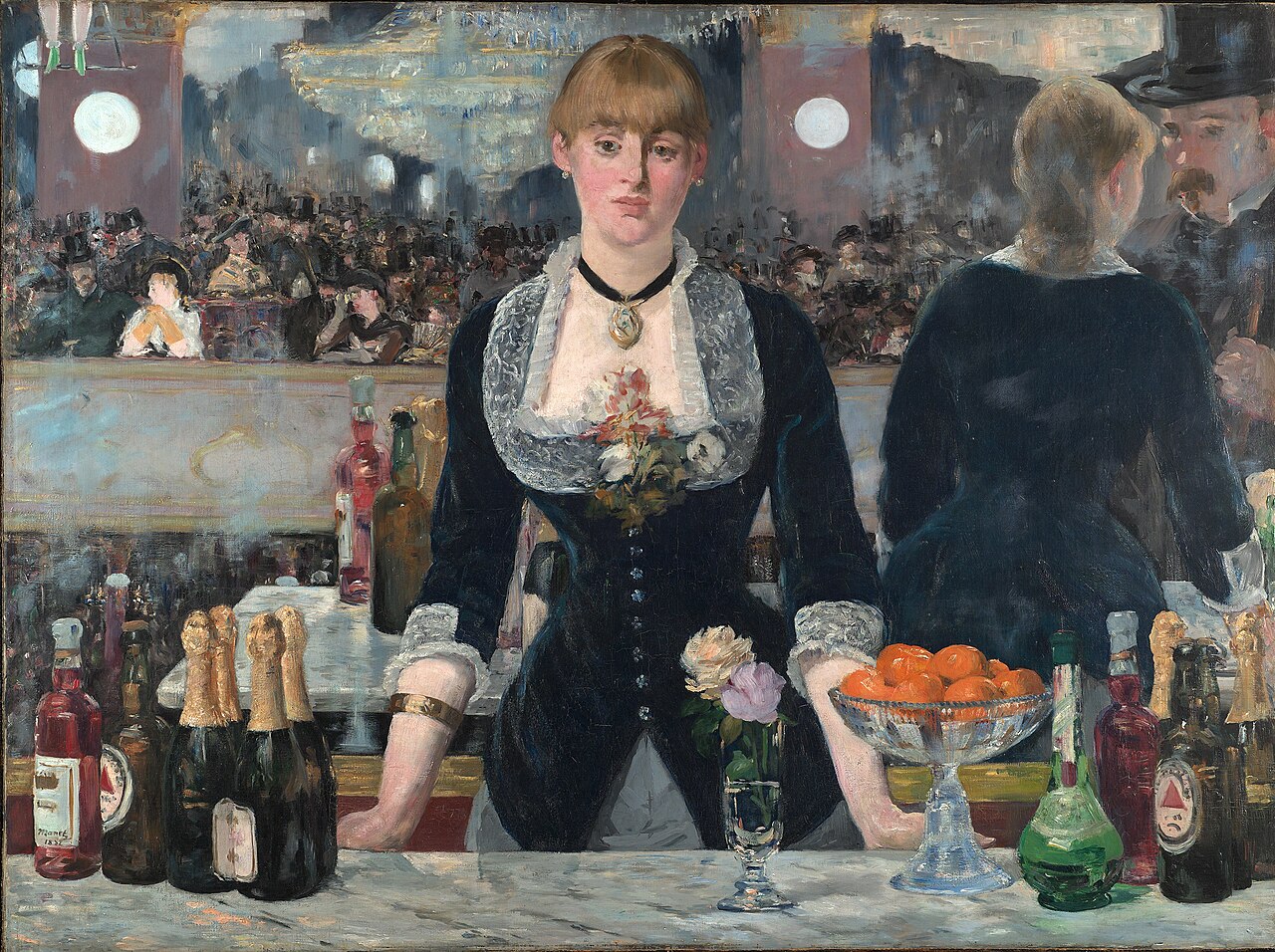
Edouard Manet, A Bar at the Folies Bergère
Martin Croft Inngot

Author

Martin Croft

PR & Marketing Manager

Image: Wikipedia


On January 1, 1876, just after midnight, the UK Trade Mark Office opened its doors for business for the first time.


And first in line, having waited all night in the freezing cold, was a clerk from the offices of the UK’s biggest brewers, Bass, who fought off rivals (at least, that’s what the UK Intellectual Property Office’s blog said in a post at the start of 2026) to secure UK trade marks 1, 2 and 3, for his employers. Allegedly, he also managed to secure 5, 6, and 7; but someone managed to push past him to get TM number 4.


What makes that event so important in the world of intellectual property – and IP valuation – is the fact that trade mark number 1 is still valid. It has survived for 150 years. By contrast, patents don’t usually last for more than 20 years, and copyright usually expires (in the UK, at least), 70 years after the death of the author, designer or other creator.


A trade mark is not just for Christmas (OK, New Year’s Day, in this case): it can be forever.


Bass wasn’t just best at queuing all those years ago in 1875, it has also proved itself expert at managing the paperwork and paying the renewal fees for that first ever UK trade mark -- and also incidentally for UK TM00000000002, as well as four other TMs registered between January and March 1876. Generations of IP experts and clerks deserve a round of applause for that kind of dedication!


So TM UK00000000001 is living proof of the real value of trade marks (check it out on the UK IPO website). Longevity. And with longevity, you can build a brand.


The Bass Red Triangle, which is at the core of this mark, had been used by the company since at least the 1850s. Obviously, though, you can’t have a trade mark without a Trade Mark Register, and, luckily for Bass, it was the UK that created the first effective TM database.


But what does it mean to build a brand around a trade mark? For Bass, it meant becoming embedded in popular culture ever since. As the IPO blog post points out:


“In 1882, Édouard Manet painted "A Bar at the Folies-Bergère" – and there, visible in both corners of the canvas, are bottles bearing that distinctive red triangle.


The brand became synonymous with quality and modernity. Its cultural influence didn’t stop there. In the early 20th century, it caught the eye of the Cubist movement, inspiring works by Georges Braque and Pablo Picasso. Even James Joyce mentioned it in Ulysses, describing the Bass label as “certainly calculated to attract anyone’s remark on account of its scarlet appearance.”


What is a trade mark?


According to WIPO, “A trade mark is a sign capable of distinguishing the goods or services of one enterprise from those of other enterprises.” It is designed to protect origin, so customers can identify ‘the real thing’ - itself a protected trade mark for Coca-Cola.


Although most trade marks are company, product and service names, logos or images, and slogans (as with Coca-Cola), you may also be able to use a trade mark to protect:


  • Sounds

  • Colours

  • Three-dimensional shapes

  • Smells

  • Gestures

  • Or a combination of any of the above


Registering trade marks offers strong protection


A registered trade mark gives you important legal rights – for example, you can take anyone using your mark to court; you can ask Customs & Excise to seize infringing goods; you can send a ‘cease and desist’ letter demanding infringement stops; and you may be able to claim damages.


These can be very powerful deterrents for anyone thinking of trying to trade using your reputation.


You can also use the ® symbol next to your trade mark in the territories where it is registered. Note, though, that it’s illegal to use ® if your trade mark is not registered.


You can potentially:


  • generate extra income through licensing of your TM

  • sell the trade mark

  • use it in discussions with investors, lenders or grant bodies, or as collateral for borrowing


There’s an ® in forever!


As already mentioned, assuming you pay the renewal fees every 10 years and that you continue to use it for the goods and services it has been registered against, a trade mark can potentially last forever.


A touch of class

 Registered trade marks are recorded against specified goods and services, as set out in an internationally agreed list of Classes. There are 34 Classes for goods and 11 for services, making 45 in total, and a set of recognised descriptions for each one.


To return to ‘the real thing’ – a trade mark owned (in the UK, at least) by Coca-Cola since 1997. It was registered in Class 32, which covers various kinds of drinks, including beers; mineral and aerated waters; non-alcoholic drinks; fruit drinks and fruit juices; syrups for making beverages; shandy, de-alcoholised drinks, non-alcoholic beers and wines. Within this class, ‘the real thing’ is registered specifically for ‘cola beverages’.


How do I get a trade mark?


The process of registering a trade mark is relatively quick and straightforward, as long as there are no absolute or relative grounds (to use the technical terms) for refusing it.


Absolute grounds will differ from country to country, but in the UK they would include:


  • The use of purely descriptive terms, common and non-distinctive words, or generic images and shapes associated with what your company does – unless you can show these have been associated with your company through consistent use over time

  • Misleading words/images – for example, you can’t use the word ‘organic’, if what you sell isn’t actually certified as organic

  • National flags and official emblems or hallmarks, such as coats of arms, without permission; or certain internationally recognised terms and images which have special protection, such as the Olympic rings and the Red Cross/Red Crescent symbols

  • Offensive words or images


Relative grounds concern how prior rights relate to a mark you are trying to register. If there is a chance of confusion between your proposed mark and an existing one, then the likelihood is yours will be refused. You may, however, be able to negotiate with existing rights owners to narrow the scope of your trade mark and remove the possibility of confusion.


It’s a good idea to enlist the help of a qualified trade mark attorney. They can also help with searches (to establish if someone else is already using the same or a similar mark) and with managing the whole application process, including defining the Classes and specific lists of goods and services.


In general, it can help broaden the scope of your trade mark if it can cover multiple relevant classes and possible sub-categories of goods and services you may use it for, or plan to use it for in the near future. Try and anticipate any business areas you may expand into in the future, so this initial application will cover them. Tesco, for example, has had to file for new trademarks as it moved into new business areas – financial services, mobile phones and petrol, for example.


But if after five years you have not used a trade mark for one of these registered goods and services, then you may lose the registration for the unused purposes.


Countries and regions


Trade marks are country or region-specific, and the fees can add up; so start by creating a strategy for your trade mark registrations. Prioritise and budget:


Where must you register now (because you are already operating there, plan to launch there imminently, or think you could license the trade mark to a distributor or agent there)?


Where is the next priority country/region?

Don’t forget that a word or symbol may have quite different meanings or associations in different countries.


International laws on trade marks are reasonably well aligned, and there are regional trade marks (for instance, covering European Union countries), while the World Intellectual Property Organisation offers a service which registers your trade mark in up to 130 countries in one go. This can save time – but you will have to pay WIPO’s fees as well as fees for each country you choose.


In the UK, the official filing fees are just about to increase – currently, it’s £170 to file online or £200 for a paper application; this is for one trade mark in one Class. Each additional Class costs an extra £50. However, after April 1, 2026, fees increase – the IPO has listed the new fees here.


What’s the difference between ™ and ®?


Finally, you may have seen companies using ™ after a trade mark instead of ®. The ™ symbol can be used to indicate an unregistered trade mark.


A company which uses a trade mark, brand, product name, or logo over time may be able to claim common law rights to that mark because of use and reputation without registering it, and using TM may indicate to anyone seeing it that you regard it as a trade mark; this in itself can help acquire distinctiveness.


However, registering a trade mark gives you much stronger protection. With a registered mark, a rival has to prove they are not infringing your rights.


With an unregistered mark, the mark owner must prove in UK court, under the laws covering ‘passing off’, that they have suffered financial loss and/or other damage through someone else’s use of a similar mark. This is not straightforward - it often involves extensive market research to prove confusion amongst customers, and detailed analysis to evidence resulting damage.

Image: Wikipedia


On January 1, 1876, just after midnight, the UK Trade Mark Office opened its doors for business for the first time.


And first in line, having waited all night in the freezing cold, was a clerk from the offices of the UK’s biggest brewers, Bass, who fought off rivals (at least, that’s what the UK Intellectual Property Office’s blog said in a post at the start of 2026) to secure UK trade marks 1, 2 and 3, for his employers. Allegedly, he also managed to secure 5, 6, and 7; but someone managed to push past him to get TM number 4.


What makes that event so important in the world of intellectual property – and IP valuation – is the fact that trade mark number 1 is still valid. It has survived for 150 years. By contrast, patents don’t usually last for more than 20 years, and copyright usually expires (in the UK, at least), 70 years after the death of the author, designer or other creator.


A trade mark is not just for Christmas (OK, New Year’s Day, in this case): it can be forever.


Bass wasn’t just best at queuing all those years ago in 1875, it has also proved itself expert at managing the paperwork and paying the renewal fees for that first ever UK trade mark -- and also incidentally for UK TM00000000002, as well as four other TMs registered between January and March 1876. Generations of IP experts and clerks deserve a round of applause for that kind of dedication!


So TM UK00000000001 is living proof of the real value of trade marks (check it out on the UK IPO website). Longevity. And with longevity, you can build a brand.


The Bass Red Triangle, which is at the core of this mark, had been used by the company since at least the 1850s. Obviously, though, you can’t have a trade mark without a Trade Mark Register, and, luckily for Bass, it was the UK that created the first effective TM database.


But what does it mean to build a brand around a trade mark? For Bass, it meant becoming embedded in popular culture ever since. As the IPO blog post points out:


“In 1882, Édouard Manet painted "A Bar at the Folies-Bergère" – and there, visible in both corners of the canvas, are bottles bearing that distinctive red triangle.


The brand became synonymous with quality and modernity. Its cultural influence didn’t stop there. In the early 20th century, it caught the eye of the Cubist movement, inspiring works by Georges Braque and Pablo Picasso. Even James Joyce mentioned it in Ulysses, describing the Bass label as “certainly calculated to attract anyone’s remark on account of its scarlet appearance.”


What is a trade mark?


According to WIPO, “A trade mark is a sign capable of distinguishing the goods or services of one enterprise from those of other enterprises.” It is designed to protect origin, so customers can identify ‘the real thing’ - itself a protected trade mark for Coca-Cola.


Although most trade marks are company, product and service names, logos or images, and slogans (as with Coca-Cola), you may also be able to use a trade mark to protect:


  • Sounds

  • Colours

  • Three-dimensional shapes

  • Smells

  • Gestures

  • Or a combination of any of the above


Registering trade marks offers strong protection


A registered trade mark gives you important legal rights – for example, you can take anyone using your mark to court; you can ask Customs & Excise to seize infringing goods; you can send a ‘cease and desist’ letter demanding infringement stops; and you may be able to claim damages.


These can be very powerful deterrents for anyone thinking of trying to trade using your reputation.


You can also use the ® symbol next to your trade mark in the territories where it is registered. Note, though, that it’s illegal to use ® if your trade mark is not registered.


You can potentially:


  • generate extra income through licensing of your TM

  • sell the trade mark

  • use it in discussions with investors, lenders or grant bodies, or as collateral for borrowing


There’s an ® in forever!


As already mentioned, assuming you pay the renewal fees every 10 years and that you continue to use it for the goods and services it has been registered against, a trade mark can potentially last forever.


A touch of class

 Registered trade marks are recorded against specified goods and services, as set out in an internationally agreed list of Classes. There are 34 Classes for goods and 11 for services, making 45 in total, and a set of recognised descriptions for each one.


To return to ‘the real thing’ – a trade mark owned (in the UK, at least) by Coca-Cola since 1997. It was registered in Class 32, which covers various kinds of drinks, including beers; mineral and aerated waters; non-alcoholic drinks; fruit drinks and fruit juices; syrups for making beverages; shandy, de-alcoholised drinks, non-alcoholic beers and wines. Within this class, ‘the real thing’ is registered specifically for ‘cola beverages’.


How do I get a trade mark?


The process of registering a trade mark is relatively quick and straightforward, as long as there are no absolute or relative grounds (to use the technical terms) for refusing it.


Absolute grounds will differ from country to country, but in the UK they would include:


  • The use of purely descriptive terms, common and non-distinctive words, or generic images and shapes associated with what your company does – unless you can show these have been associated with your company through consistent use over time

  • Misleading words/images – for example, you can’t use the word ‘organic’, if what you sell isn’t actually certified as organic

  • National flags and official emblems or hallmarks, such as coats of arms, without permission; or certain internationally recognised terms and images which have special protection, such as the Olympic rings and the Red Cross/Red Crescent symbols

  • Offensive words or images


Relative grounds concern how prior rights relate to a mark you are trying to register. If there is a chance of confusion between your proposed mark and an existing one, then the likelihood is yours will be refused. You may, however, be able to negotiate with existing rights owners to narrow the scope of your trade mark and remove the possibility of confusion.


It’s a good idea to enlist the help of a qualified trade mark attorney. They can also help with searches (to establish if someone else is already using the same or a similar mark) and with managing the whole application process, including defining the Classes and specific lists of goods and services.


In general, it can help broaden the scope of your trade mark if it can cover multiple relevant classes and possible sub-categories of goods and services you may use it for, or plan to use it for in the near future. Try and anticipate any business areas you may expand into in the future, so this initial application will cover them. Tesco, for example, has had to file for new trademarks as it moved into new business areas – financial services, mobile phones and petrol, for example.


But if after five years you have not used a trade mark for one of these registered goods and services, then you may lose the registration for the unused purposes.


Countries and regions


Trade marks are country or region-specific, and the fees can add up; so start by creating a strategy for your trade mark registrations. Prioritise and budget:


Where must you register now (because you are already operating there, plan to launch there imminently, or think you could license the trade mark to a distributor or agent there)?


Where is the next priority country/region?

Don’t forget that a word or symbol may have quite different meanings or associations in different countries.


International laws on trade marks are reasonably well aligned, and there are regional trade marks (for instance, covering European Union countries), while the World Intellectual Property Organisation offers a service which registers your trade mark in up to 130 countries in one go. This can save time – but you will have to pay WIPO’s fees as well as fees for each country you choose.


In the UK, the official filing fees are just about to increase – currently, it’s £170 to file online or £200 for a paper application; this is for one trade mark in one Class. Each additional Class costs an extra £50. However, after April 1, 2026, fees increase – the IPO has listed the new fees here.


What’s the difference between ™ and ®?


Finally, you may have seen companies using ™ after a trade mark instead of ®. The ™ symbol can be used to indicate an unregistered trade mark.


A company which uses a trade mark, brand, product name, or logo over time may be able to claim common law rights to that mark because of use and reputation without registering it, and using TM may indicate to anyone seeing it that you regard it as a trade mark; this in itself can help acquire distinctiveness.


However, registering a trade mark gives you much stronger protection. With a registered mark, a rival has to prove they are not infringing your rights.


With an unregistered mark, the mark owner must prove in UK court, under the laws covering ‘passing off’, that they have suffered financial loss and/or other damage through someone else’s use of a similar mark. This is not straightforward - it often involves extensive market research to prove confusion amongst customers, and detailed analysis to evidence resulting damage.

Image: Wikipedia


On January 1, 1876, just after midnight, the UK Trade Mark Office opened its doors for business for the first time.


And first in line, having waited all night in the freezing cold, was a clerk from the offices of the UK’s biggest brewers, Bass, who fought off rivals (at least, that’s what the UK Intellectual Property Office’s blog said in a post at the start of 2026) to secure UK trade marks 1, 2 and 3, for his employers. Allegedly, he also managed to secure 5, 6, and 7; but someone managed to push past him to get TM number 4.


What makes that event so important in the world of intellectual property – and IP valuation – is the fact that trade mark number 1 is still valid. It has survived for 150 years. By contrast, patents don’t usually last for more than 20 years, and copyright usually expires (in the UK, at least), 70 years after the death of the author, designer or other creator.


A trade mark is not just for Christmas (OK, New Year’s Day, in this case): it can be forever.


Bass wasn’t just best at queuing all those years ago in 1875, it has also proved itself expert at managing the paperwork and paying the renewal fees for that first ever UK trade mark -- and also incidentally for UK TM00000000002, as well as four other TMs registered between January and March 1876. Generations of IP experts and clerks deserve a round of applause for that kind of dedication!


So TM UK00000000001 is living proof of the real value of trade marks (check it out on the UK IPO website). Longevity. And with longevity, you can build a brand.


The Bass Red Triangle, which is at the core of this mark, had been used by the company since at least the 1850s. Obviously, though, you can’t have a trade mark without a Trade Mark Register, and, luckily for Bass, it was the UK that created the first effective TM database.


But what does it mean to build a brand around a trade mark? For Bass, it meant becoming embedded in popular culture ever since. As the IPO blog post points out:


“In 1882, Édouard Manet painted "A Bar at the Folies-Bergère" – and there, visible in both corners of the canvas, are bottles bearing that distinctive red triangle.


The brand became synonymous with quality and modernity. Its cultural influence didn’t stop there. In the early 20th century, it caught the eye of the Cubist movement, inspiring works by Georges Braque and Pablo Picasso. Even James Joyce mentioned it in Ulysses, describing the Bass label as “certainly calculated to attract anyone’s remark on account of its scarlet appearance.”


What is a trade mark?


According to WIPO, “A trade mark is a sign capable of distinguishing the goods or services of one enterprise from those of other enterprises.” It is designed to protect origin, so customers can identify ‘the real thing’ - itself a protected trade mark for Coca-Cola.


Although most trade marks are company, product and service names, logos or images, and slogans (as with Coca-Cola), you may also be able to use a trade mark to protect:


  • Sounds

  • Colours

  • Three-dimensional shapes

  • Smells

  • Gestures

  • Or a combination of any of the above


Registering trade marks offers strong protection


A registered trade mark gives you important legal rights – for example, you can take anyone using your mark to court; you can ask Customs & Excise to seize infringing goods; you can send a ‘cease and desist’ letter demanding infringement stops; and you may be able to claim damages.


These can be very powerful deterrents for anyone thinking of trying to trade using your reputation.


You can also use the ® symbol next to your trade mark in the territories where it is registered. Note, though, that it’s illegal to use ® if your trade mark is not registered.


You can potentially:


  • generate extra income through licensing of your TM

  • sell the trade mark

  • use it in discussions with investors, lenders or grant bodies, or as collateral for borrowing


There’s an ® in forever!


As already mentioned, assuming you pay the renewal fees every 10 years and that you continue to use it for the goods and services it has been registered against, a trade mark can potentially last forever.


A touch of class

 Registered trade marks are recorded against specified goods and services, as set out in an internationally agreed list of Classes. There are 34 Classes for goods and 11 for services, making 45 in total, and a set of recognised descriptions for each one.


To return to ‘the real thing’ – a trade mark owned (in the UK, at least) by Coca-Cola since 1997. It was registered in Class 32, which covers various kinds of drinks, including beers; mineral and aerated waters; non-alcoholic drinks; fruit drinks and fruit juices; syrups for making beverages; shandy, de-alcoholised drinks, non-alcoholic beers and wines. Within this class, ‘the real thing’ is registered specifically for ‘cola beverages’.


How do I get a trade mark?


The process of registering a trade mark is relatively quick and straightforward, as long as there are no absolute or relative grounds (to use the technical terms) for refusing it.


Absolute grounds will differ from country to country, but in the UK they would include:


  • The use of purely descriptive terms, common and non-distinctive words, or generic images and shapes associated with what your company does – unless you can show these have been associated with your company through consistent use over time

  • Misleading words/images – for example, you can’t use the word ‘organic’, if what you sell isn’t actually certified as organic

  • National flags and official emblems or hallmarks, such as coats of arms, without permission; or certain internationally recognised terms and images which have special protection, such as the Olympic rings and the Red Cross/Red Crescent symbols

  • Offensive words or images


Relative grounds concern how prior rights relate to a mark you are trying to register. If there is a chance of confusion between your proposed mark and an existing one, then the likelihood is yours will be refused. You may, however, be able to negotiate with existing rights owners to narrow the scope of your trade mark and remove the possibility of confusion.


It’s a good idea to enlist the help of a qualified trade mark attorney. They can also help with searches (to establish if someone else is already using the same or a similar mark) and with managing the whole application process, including defining the Classes and specific lists of goods and services.


In general, it can help broaden the scope of your trade mark if it can cover multiple relevant classes and possible sub-categories of goods and services you may use it for, or plan to use it for in the near future. Try and anticipate any business areas you may expand into in the future, so this initial application will cover them. Tesco, for example, has had to file for new trademarks as it moved into new business areas – financial services, mobile phones and petrol, for example.


But if after five years you have not used a trade mark for one of these registered goods and services, then you may lose the registration for the unused purposes.


Countries and regions


Trade marks are country or region-specific, and the fees can add up; so start by creating a strategy for your trade mark registrations. Prioritise and budget:


Where must you register now (because you are already operating there, plan to launch there imminently, or think you could license the trade mark to a distributor or agent there)?


Where is the next priority country/region?

Don’t forget that a word or symbol may have quite different meanings or associations in different countries.


International laws on trade marks are reasonably well aligned, and there are regional trade marks (for instance, covering European Union countries), while the World Intellectual Property Organisation offers a service which registers your trade mark in up to 130 countries in one go. This can save time – but you will have to pay WIPO’s fees as well as fees for each country you choose.


In the UK, the official filing fees are just about to increase – currently, it’s £170 to file online or £200 for a paper application; this is for one trade mark in one Class. Each additional Class costs an extra £50. However, after April 1, 2026, fees increase – the IPO has listed the new fees here.


What’s the difference between ™ and ®?


Finally, you may have seen companies using ™ after a trade mark instead of ®. The ™ symbol can be used to indicate an unregistered trade mark.


A company which uses a trade mark, brand, product name, or logo over time may be able to claim common law rights to that mark because of use and reputation without registering it, and using TM may indicate to anyone seeing it that you regard it as a trade mark; this in itself can help acquire distinctiveness.


However, registering a trade mark gives you much stronger protection. With a registered mark, a rival has to prove they are not infringing your rights.


With an unregistered mark, the mark owner must prove in UK court, under the laws covering ‘passing off’, that they have suffered financial loss and/or other damage through someone else’s use of a similar mark. This is not straightforward - it often involves extensive market research to prove confusion amongst customers, and detailed analysis to evidence resulting damage.
Image: Wikipedia


On January 1, 1876, just after midnight, the UK Trade Mark Office opened its doors for business for the first time.


And first in line, having waited all night in the freezing cold, was a clerk from the offices of the UK’s biggest brewers, Bass, who fought off rivals (at least, that’s what the UK Intellectual Property Office’s blog said in a post at the start of 2026) to secure UK trade marks 1, 2 and 3, for his employers. Allegedly, he also managed to secure 5, 6, and 7; but someone managed to push past him to get TM number 4.


What makes that event so important in the world of intellectual property – and IP valuation – is the fact that trade mark number 1 is still valid. It has survived for 150 years. By contrast, patents don’t usually last for more than 20 years, and copyright usually expires (in the UK, at least), 70 years after the death of the author, designer or other creator.


A trade mark is not just for Christmas (OK, New Year’s Day, in this case): it can be forever.


Bass wasn’t just best at queuing all those years ago in 1875, it has also proved itself expert at managing the paperwork and paying the renewal fees for that first ever UK trade mark -- and also incidentally for UK TM00000000002, as well as four other TMs registered between January and March 1876. Generations of IP experts and clerks deserve a round of applause for that kind of dedication!


So TM UK00000000001 is living proof of the real value of trade marks (check it out on the UK IPO website). Longevity. And with longevity, you can build a brand.


The Bass Red Triangle, which is at the core of this mark, had been used by the company since at least the 1850s. Obviously, though, you can’t have a trade mark without a Trade Mark Register, and, luckily for Bass, it was the UK that created the first effective TM database.


But what does it mean to build a brand around a trade mark? For Bass, it meant becoming embedded in popular culture ever since. As the IPO blog post points out:


“In 1882, Édouard Manet painted "A Bar at the Folies-Bergère" – and there, visible in both corners of the canvas, are bottles bearing that distinctive red triangle.


The brand became synonymous with quality and modernity. Its cultural influence didn’t stop there. In the early 20th century, it caught the eye of the Cubist movement, inspiring works by Georges Braque and Pablo Picasso. Even James Joyce mentioned it in Ulysses, describing the Bass label as “certainly calculated to attract anyone’s remark on account of its scarlet appearance.”


What is a trade mark?


According to WIPO, “A trade mark is a sign capable of distinguishing the goods or services of one enterprise from those of other enterprises.” It is designed to protect origin, so customers can identify ‘the real thing’ - itself a protected trade mark for Coca-Cola.


Although most trade marks are company, product and service names, logos or images, and slogans (as with Coca-Cola), you may also be able to use a trade mark to protect:


  • Sounds

  • Colours

  • Three-dimensional shapes

  • Smells

  • Gestures

  • Or a combination of any of the above


Registering trade marks offers strong protection


A registered trade mark gives you important legal rights – for example, you can take anyone using your mark to court; you can ask Customs & Excise to seize infringing goods; you can send a ‘cease and desist’ letter demanding infringement stops; and you may be able to claim damages.


These can be very powerful deterrents for anyone thinking of trying to trade using your reputation.


You can also use the ® symbol next to your trade mark in the territories where it is registered. Note, though, that it’s illegal to use ® if your trade mark is not registered.


You can potentially:


  • generate extra income through licensing of your TM

  • sell the trade mark

  • use it in discussions with investors, lenders or grant bodies, or as collateral for borrowing


There’s an ® in forever!


As already mentioned, assuming you pay the renewal fees every 10 years and that you continue to use it for the goods and services it has been registered against, a trade mark can potentially last forever.


A touch of class

 Registered trade marks are recorded against specified goods and services, as set out in an internationally agreed list of Classes. There are 34 Classes for goods and 11 for services, making 45 in total, and a set of recognised descriptions for each one.


To return to ‘the real thing’ – a trade mark owned (in the UK, at least) by Coca-Cola since 1997. It was registered in Class 32, which covers various kinds of drinks, including beers; mineral and aerated waters; non-alcoholic drinks; fruit drinks and fruit juices; syrups for making beverages; shandy, de-alcoholised drinks, non-alcoholic beers and wines. Within this class, ‘the real thing’ is registered specifically for ‘cola beverages’.


How do I get a trade mark?


The process of registering a trade mark is relatively quick and straightforward, as long as there are no absolute or relative grounds (to use the technical terms) for refusing it.


Absolute grounds will differ from country to country, but in the UK they would include:


  • The use of purely descriptive terms, common and non-distinctive words, or generic images and shapes associated with what your company does – unless you can show these have been associated with your company through consistent use over time

  • Misleading words/images – for example, you can’t use the word ‘organic’, if what you sell isn’t actually certified as organic

  • National flags and official emblems or hallmarks, such as coats of arms, without permission; or certain internationally recognised terms and images which have special protection, such as the Olympic rings and the Red Cross/Red Crescent symbols

  • Offensive words or images


Relative grounds concern how prior rights relate to a mark you are trying to register. If there is a chance of confusion between your proposed mark and an existing one, then the likelihood is yours will be refused. You may, however, be able to negotiate with existing rights owners to narrow the scope of your trade mark and remove the possibility of confusion.


It’s a good idea to enlist the help of a qualified trade mark attorney. They can also help with searches (to establish if someone else is already using the same or a similar mark) and with managing the whole application process, including defining the Classes and specific lists of goods and services.


In general, it can help broaden the scope of your trade mark if it can cover multiple relevant classes and possible sub-categories of goods and services you may use it for, or plan to use it for in the near future. Try and anticipate any business areas you may expand into in the future, so this initial application will cover them. Tesco, for example, has had to file for new trademarks as it moved into new business areas – financial services, mobile phones and petrol, for example.


But if after five years you have not used a trade mark for one of these registered goods and services, then you may lose the registration for the unused purposes.


Countries and regions


Trade marks are country or region-specific, and the fees can add up; so start by creating a strategy for your trade mark registrations. Prioritise and budget:


Where must you register now (because you are already operating there, plan to launch there imminently, or think you could license the trade mark to a distributor or agent there)?


Where is the next priority country/region?

Don’t forget that a word or symbol may have quite different meanings or associations in different countries.


International laws on trade marks are reasonably well aligned, and there are regional trade marks (for instance, covering European Union countries), while the World Intellectual Property Organisation offers a service which registers your trade mark in up to 130 countries in one go. This can save time – but you will have to pay WIPO’s fees as well as fees for each country you choose.


In the UK, the official filing fees are just about to increase – currently, it’s £170 to file online or £200 for a paper application; this is for one trade mark in one Class. Each additional Class costs an extra £50. However, after April 1, 2026, fees increase – the IPO has listed the new fees here.


What’s the difference between ™ and ®?


Finally, you may have seen companies using ™ after a trade mark instead of ®. The ™ symbol can be used to indicate an unregistered trade mark.


A company which uses a trade mark, brand, product name, or logo over time may be able to claim common law rights to that mark because of use and reputation without registering it, and using TM may indicate to anyone seeing it that you regard it as a trade mark; this in itself can help acquire distinctiveness.


However, registering a trade mark gives you much stronger protection. With a registered mark, a rival has to prove they are not infringing your rights.


With an unregistered mark, the mark owner must prove in UK court, under the laws covering ‘passing off’, that they have suffered financial loss and/or other damage through someone else’s use of a similar mark. This is not straightforward - it often involves extensive market research to prove confusion amongst customers, and detailed analysis to evidence resulting damage.

Inngot's online platform identifies all your intangible assets and demonstrates their value to lenders, investors, acquirers, licensees and stakeholders

Accreditations

Cyber Essentials Plus 2025
psr sow accredited supplier
IVSC member

Copyright © Inngot Limited 2019-2025. All rights reserved.

Inngot's online platform identifies all your intangible assets and demonstrates their value to lenders, investors, acquirers, licensees and stakeholders

Accreditations

Cyber Essentials Plus 2025
psr sow accredited supplier
IVSC member

Copyright © Inngot Limited 2019-2025. All rights reserved.

Inngot's online platform identifies all your intangible assets and demonstrates their value to lenders, investors, acquirers, licensees and stakeholders

Accreditations

Cyber Essentials Plus 2025
psr sow accredited supplier
IVSC member

Copyright © Inngot Limited 2019-2025. All rights reserved.

Inngot's online platform identifies all your intangible assets and demonstrates their value to lenders, investors, acquirers, licensees and stakeholders

Accreditations

Cyber Essentials Plus 2025
psr sow accredited supplier
IVSC member

Copyright © Inngot Limited 2019-2025. All rights reserved.