McDonald’s rebuffed again by USPTO as it tries to resuscitate lost ‘Extra Value Meal’ trade mark
27 Apr 2026

Author
Martin Croft
PR & Marketing Manager
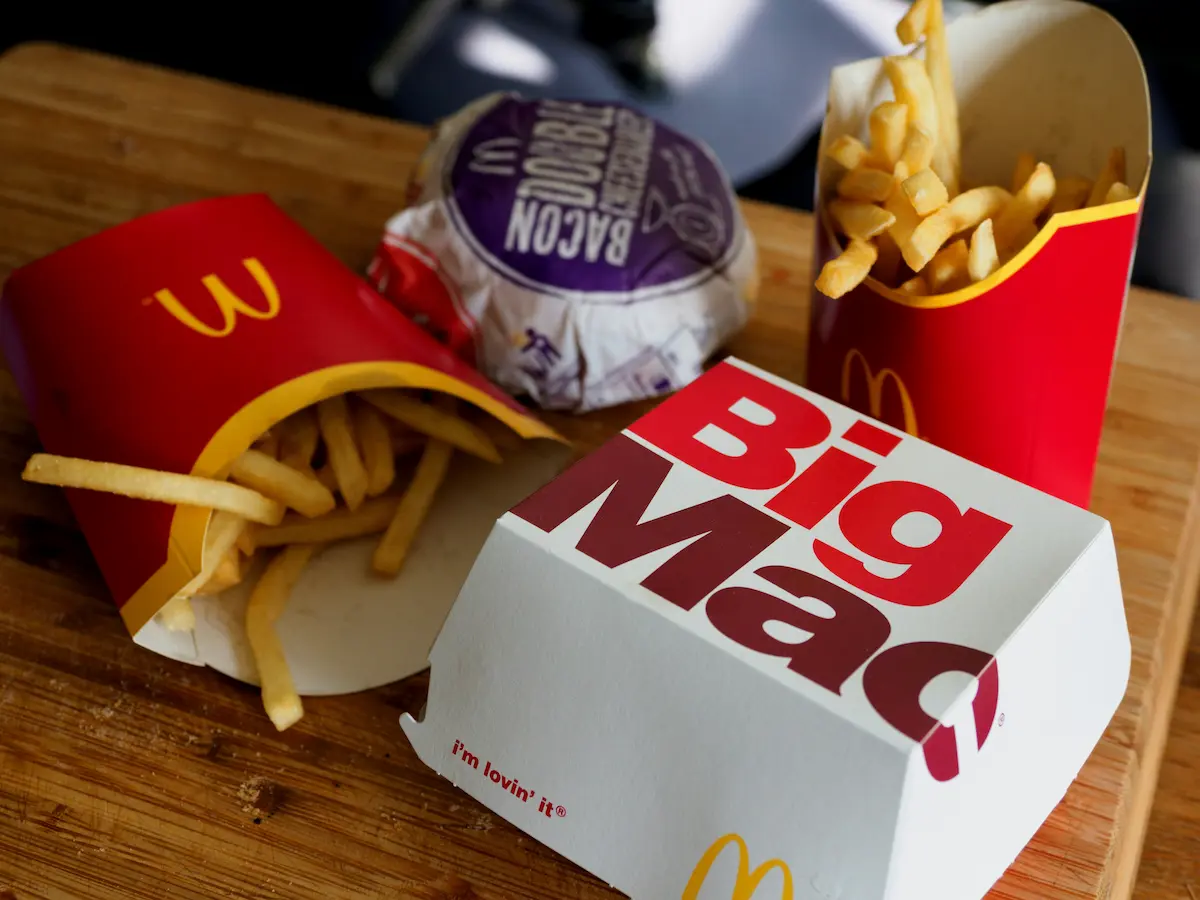
Photo by Brett Jordan on Unsplash
Fast-food giant McDonald’s has had a second attempt to revive its ‘Extra Value Meal’ registered trade mark rejected by the United States Patent and Trademark Office (USPTO).
The world’s biggest fast-food restaurant chain had successfully applied to register the term ‘Extra Value Meal’ and also ‘EVM’ as trade marks in 1994 (according to the USPTO trade mark database.
The USPTO database shows that the ‘EVM’ trade mark was actually abandoned in 2009; but McDonald’s continued to use the ® symbol on ‘Extra Value Meal’ up to 2019, when it discontinued the promotion.
In the US, TMs have to be renewed five years and 10 years after being granted, and then every 10 years after that. For some reason, despite various notices from the USPTO flagging the need to renew at the 30-year mark (in 2024), McDonald’s did not do so, so losing the right to use the ® symbol in 2025.
What’s worse is that the USPTO has now rejected McDonald’s application to revive its registered trade mark on the grounds that the term “merely describes a feature of applicant’s goods and/or services.”
An application to reactivate the registration for “EVM” is also working its way through the USPTO.
The trade mark registrations matter because McDonald’s re-launched its ‘Extra Value Meal’ promotion at the end of 2025.
As reported in an article in the New York Post, it is unclear why the original ‘Extra Value Meal’ registration was allowed to lapse. The Post quotes a US trade mark lawyer, Josh Gerben of Gerben IP, as saying: “It’s very rare for a large company to own a trademark for three decades … and let it just abandon… It’s a bit of a head scratcher.”
Gerben suggests that the cancellation of the registration may be due to McDonald’s not actively using it when reregistration should have happened; but, as he tells The Post, “the company could have gotten creative and used the term in promotional ways to hold onto it for longer.”
A McDonald’s spokesperson told the Post that the latest milestone in the trade mark filing process was “a routine update… It has zero impact on our ability to use ‘Extra Value Meal’ in our restaurants as we have for decades. Any claims otherwise are manufactured news.”
McDonald’s is claiming that its use of ‘Extra Value Meal’ as a registered trade mark means it has “acquired distinctiveness” and is associated in consumers’ minds with McDonalds. Gerben says it is likely that McDonald’s will win its battle with the USPTO.
McDonald’s released its fourth quarter financial results in February 2026. These showed that US domestic sales increased by 6.8% in Q4 2025, which media reports are attributing to the ‘Extra Value Meal’ promotion.
McDonald’s has had run-ins with trade mark offices before; in June 2024, as the BBC reported, the European Union Intellectual Property Office (EUIPO) ruled in favour of a small rival fast food chain, Ireland’s Supermac’s, and said McDonald’s could no longer use the term ‘Big Mac’ to stop others using the term ‘Mac’ as part of fast-food restaurant names in the EU.
Supermac’s argument, which the EUIPO partially accepted, was that McDonald’s was not using the term ‘Mac’ for restaurants so it should not be allowed to block others from doing so.
McDonald’s appealed the ruling, which eventually went to the Court of Justice of the European Union…The CJEU's General Court ruling in fact changed EUIPO’s decision making it much stricter “thus further limiting the protection conferred on McDonald’s by the contested mark.” The McDonald's trade mark for Big Mac was restricted by the CJEU to beef burgers alone; The EUIPO ruling had allowed it to be used for chicken burgers and other products as well.
The General Court concluded that McDonald’s did not prove “that the contested mark has been put to genuine use as regards the goods ‘chicken sandwiches’, the goods ‘foods prepared from poultry products’ and the ‘services rendered or associated with operating restaurants and other establishments or facilities engaged in providing food and drink prepared for consumption and for drive-through facilities; preparation of carry-out foods’. “
The Court further ruled that much of McDonald’s evidence did “not serve to prove that the contested mark has been used in connection with ‘services rendered or associated with operating restaurants and other establishments or facilities engaged in providing food and drink prepared for consumption and for drive-through facilities; preparation of carryout foods’.”