Understanding IP Finance: Bridging the Gap Between Intangible Assets and Traditional Lending
30 Jan 2026

Author
Martin Croft
PR & Marketing Manager
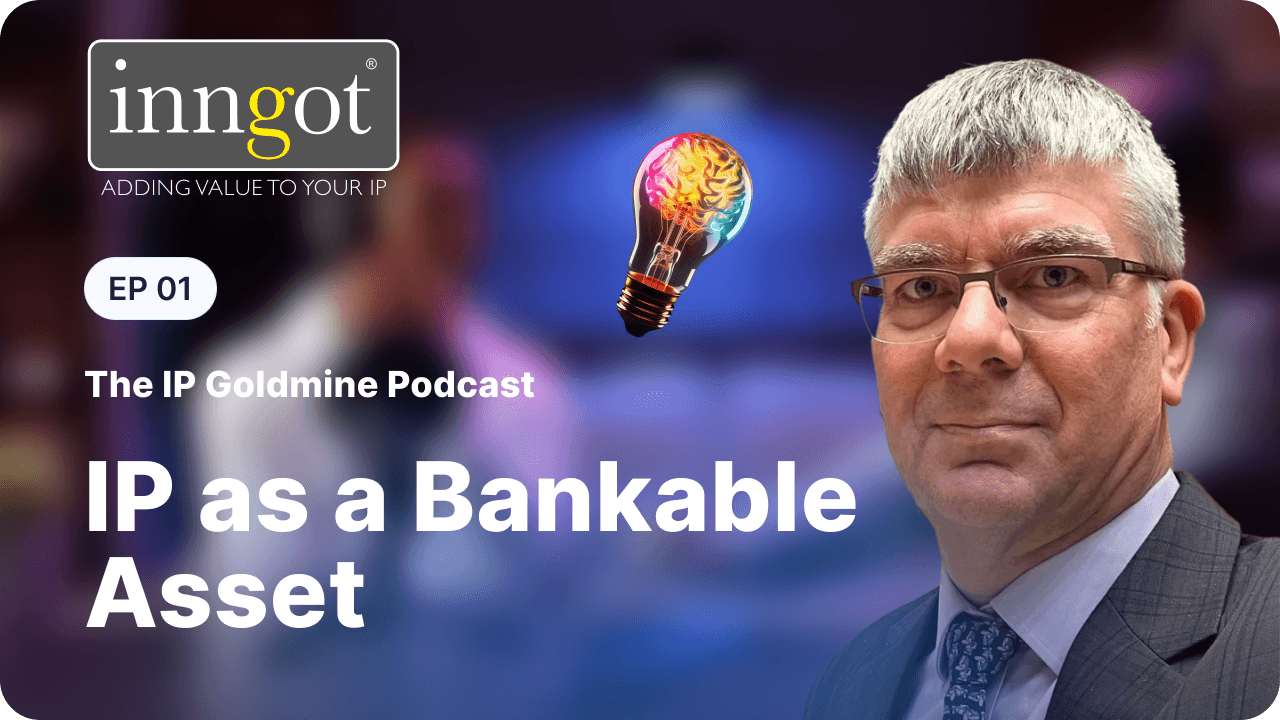
Watch the full IP Goldmine podcast episode with Martin Brassell here: IP as a Bankable Asset
Intangible assets, particularly intellectual property (IP), has never been more important in business financing than they are today. Today’s SMEs and scaleups do not own the same levels of tangible assets that their equivalents from 100 years ago would.
Unfortunately, traditional banks are hesitant to lend against IP and other intangible assets due to outdated perceptions and accounting practices which evolved to deal with 19th Century heavy industry. More recent rules governing banks, notably the Basel III regulations, don’t help either.
Understanding Risk in Lending
One of the fundamental concepts that banks have to worry about when considering lending is risk. That means essentially an uncertain outcome, which can manifest as either an upside or a downside.
In the context of lending, though, banks primarily focus on the downside risk—specifically, the possibility of not being repaid. This perspective shapes how banks approach credit assessments and their willingness to lend.
The Challenge of Intangible Assets
One of the core challenges is the traditional banking industry's cautious stance towards intangible assets like IP. Accounting rules simply have not kept pace with the rise of intangible investments.
For instance, the latest ONS statistics (covering 2023) show Investment in intangible assets was £244.7 billion, compared with £230.1 billion in 2022. The 2023 figure was £85.3 billion higher than investment in tangible assets, such as machinery and buildings, in the latest period.
The main problem is that many banks view IP and intangibles as somewhat mysterious or even "voodoo", due to their limited representation on balance sheets. Here’s where the accounting rules kick in; the often-massive investments made in innovation and IP development are not adequately reflected in the accounts. They only appear as a ‘sunk cost’ – no matter how much revenue and profits they generate. This leads most banks to dismiss companies with substantial intangible investments as high-risk ventures.
Misunderstandings About IP and Risk
This feeds into some common misconceptions banks hold regarding IP. Many analysts still regard intangible assets as liabilities, leading to a misunderstanding of a company's true value. For instance, a growth company may show accumulated losses in its P&L statement due to significant investment in R&D, yet lack corresponding intangible asset representation on the balance sheet. This discrepancy often results in banks categorizing these companies as unworthy of credit, despite their potential for future profitability.
Changing Attitudes Towards IP
However, there is a silver lining. There has been a gradual shift in attitudes among some banks. Institutions like HSBC and NatWest are beginning to recognize the importance of lending against intangible assets. They understand that the traditional model of relying solely on tangible assets is no longer sustainable, especially for SMEs where tangible assets are diminishing in availability. Indeed, an analysis of America’s biggest companies has shown that 92% of stock market value is made up of intangibles; for scaleups, it’s often far more than that.
Identifying Bankable IP
So, how do banks identify IP that can be considered bankable? Banks that grasp the significance of IP often employ profiling systems to evaluate their clients’ intangible assets. This comprehensive approach involves looking beyond patents to include software and contracts that support these assets. For example, a company like Apple has a vast patent portfolio, but its true value also lies in the underlying contracts and relationships that enhance its market position.
Controls and Considerations for Lending
So how do banks that lend against IP today manage risk? One crucial factor is ensuring that the company genuinely owns the IP it claims. Misunderstandings about ownership can lead to serious complications down the line. Banks need a comprehensive understanding of the full inventory of intangible assets that a company possesses to make informed lending decisions.
Conclusion
The 21st century lending landscape is ripe for change, and IP-backed finance will play a major role in that change. The shift from tangible assets driving company value to intangible assets powering them is not going to slow down. It is imperative for banks to adapt their lending practices. Recognizing the value of IP and understanding its role in driving future growth will not only support innovation, but also help bridge the gap between traditional lending and modern economic realities.